This article is general health education, not medical advice. It does not interpret any individual result, and pregnancy results in particular must be read by your own maternity clinician. See our Medical Disclaimer.
CBC in Pregnancy: What Changes and Why
Pregnancy changes the blood count on purpose. Plasma volume rises more than red cell mass does, so hemoglobin and hematocrit fall by dilution, platelet counts drift down across the trimesters, and the white cell count rises. Because of that, obstetric practice uses trimester-specific thresholds rather than the general adult range: ACOG and the CDC define anemia in pregnancy as hemoglobin below 11 g/dL (hematocrit below 33%) in the first or third trimester, or below 10.5 g/dL (hematocrit below 32%) in the second. Reference ranges are also laboratory-specific, so read the band on your own report, and take any question about your result to the clinician managing your pregnancy. Only they can interpret it in context.
Why the numbers move
From early pregnancy onward, blood volume expands. Both components rise, but not equally: plasma volume increases proportionally more than red cell mass, so the concentration of red cells in a given volume of blood falls. Hemoglobin and hematocrit are concentration measurements, so they read lower even though the total amount of hemoglobin in the body has increased.
That is why the phrase “physiologic anemia of pregnancy” exists. It describes a dilution effect that is part of a normal pregnancy, and it is not the same thing as iron-deficiency anemia, which is also common in pregnancy. Distinguishing the two is a clinical task, and it is one of the main reasons a blood count is repeated during pregnancy at all.
The thresholds obstetric practice actually uses
| Measure | Threshold used in pregnancy | Source |
|---|---|---|
| Hemoglobin, first trimester | Below 11 g/dL is defined as anemia | ACOG Practice Bulletin 233, “Anemia in Pregnancy” (2021), using the CDC definition |
| Hemoglobin, second trimester | Below 10.5 g/dL | Same |
| Hemoglobin, third trimester | Below 11 g/dL | Same |
| Hematocrit | Below 33% (first and third trimester), below 32% (second) | Same |
| Platelets | Below 150 x 10⁹/L is thrombocytopenia, which ACOG notes occurs in 7 to 12 percent of pregnancies at the time of delivery | ACOG Practice Bulletin 207, “Thrombocytopenia in Pregnancy” (2019) |
Two things about that table. It is a set of definitions used by clinicians, not a verdict on any individual pregnancy. And the values are thresholds, not a target you should be trying to hit.
The mismatch nobody warns pregnant readers about
Here is the point that sends people searching at midnight, and it is rarely explained.
The reference range printed beside your result is usually your laboratory’s general adult range. It is often not trimester-specific. The H and L flags are generated by comparing your value with that printed band, automatically. Meanwhile your obstetric clinician is working from pregnancy-specific thresholds like the ones above.
So the flags on the page and the thresholds in use can point different ways:
- A hemoglobin flagged low against a general adult female range can still sit above ACOG’s trimester threshold for anemia.
- A white cell count flagged high may reflect the rise that accompanies normal pregnancy rather than an infection.
- A platelet count that has drifted down across trimesters may still sit above the level ACOG’s guidance treats as thrombocytopenia.
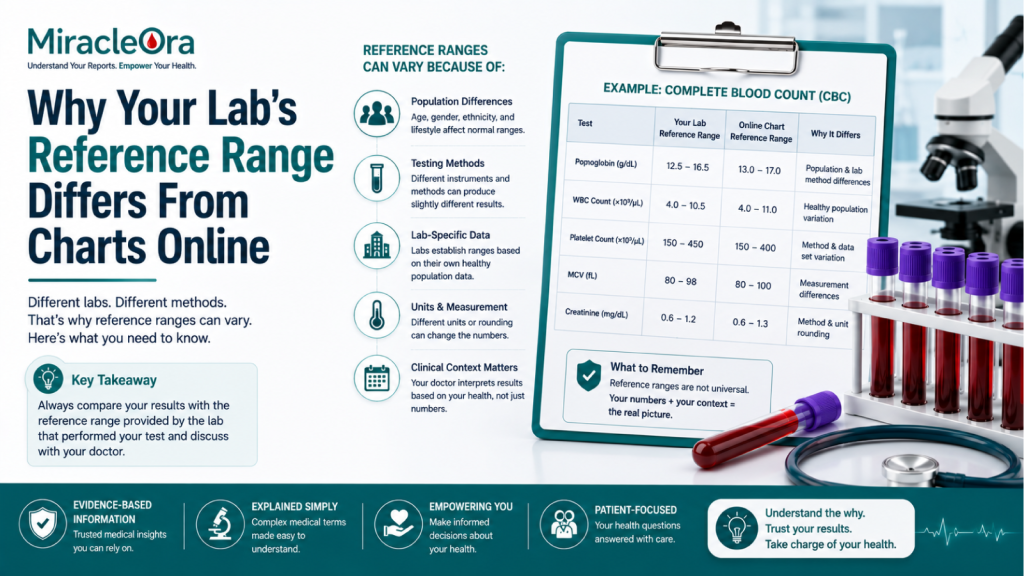
The reverse is equally true, and this is why we will not tell you which side you are on. A flag is a comparison against a printed band. It is not an assessment of your pregnancy. What the letters mean mechanically is explained in what an H or L flag on your blood test means, and why printed bands differ between laboratories in why your lab’s reference range differs from charts online.
Your maternity clinician is reading a different, more informed comparison than your printout is. That is the honest reason a flagged value in pregnancy needs their interpretation rather than any chart, including ours.
What each part of the count tends to do
Hemoglobin and hematocrit. Fall through the first and second trimesters as plasma volume expands, often reaching their lowest point in the second trimester and rising somewhat late in pregnancy. This pattern is why the second-trimester anemia threshold is set lower than the first and third. What “low hemoglobin” means more generally, outside pregnancy, is covered in is your hemoglobin low.
Platelets. Tend to drift downward as pregnancy progresses. ACOG’s guidance describes gestational thrombocytopenia as a benign condition, while also making clear that thrombocytopenia in pregnancy can arise from several different physiologic and pathologic causes, some unique to pregnancy. That is precisely why a low platelet count in pregnancy is assessed rather than assumed, and never self-assessed.
White cells. The count typically runs higher in pregnancy than outside it, and higher again around labor. Research establishing trimester-specific reference intervals for blood count parameters in normal pregnancy consistently describes this shift. A raised white count in pregnancy is therefore a poor stand-alone signal of infection.
Red cell indices. MCV and MCH describe the average red cell rather than a concentration, so they behave differently from hemoglobin and hematocrit and are part of how clinicians separate dilution from iron deficiency.
Ranges shift by trimester, and only your clinician can apply them
We are deliberately not publishing a full trimester-by-trimester reference chart on this page. Here is why, stated plainly.
Trimester-specific reference intervals exist in the research literature, but they have been established in specific populations, on specific analyzers, using specific study designs. They differ between published studies and between countries. Printing one set as though it were universal would hand a pregnant reader a yardstick that may not match either her laboratory or her clinician’s practice, and on a page about pregnancy that is a real harm rather than a theoretical one.
What is safe to say is the structure of it: the range that applies to you depends on which trimester you are in, on your own laboratory’s intervals, and on your clinical picture, and those three things are combined by a person, not a chart. The general adult table on this site, in the complete CBC reference-range table, is explicitly labeled adult and non-pregnant for this reason. Ranges shifting by life stage is the same reason a child’s report cannot be read against an adult chart, which is why children’s blood count ranges are read against their own age-based charts rather than an adult one.
What to do with a flagged result during pregnancy
- Contact the clinician or midwife managing your pregnancy, not a general search. They ordered the test and know which threshold applies.
- Do not start, stop or change any supplement or medicine based on a number, including iron. Dose and necessity are clinical decisions in pregnancy.
- Keep the report. Trends across pregnancy carry more information than a single value.
- Note the collection date and trimester, since the applicable threshold changes with it.
- Report symptoms, not just numbers. How you feel is part of the assessment.
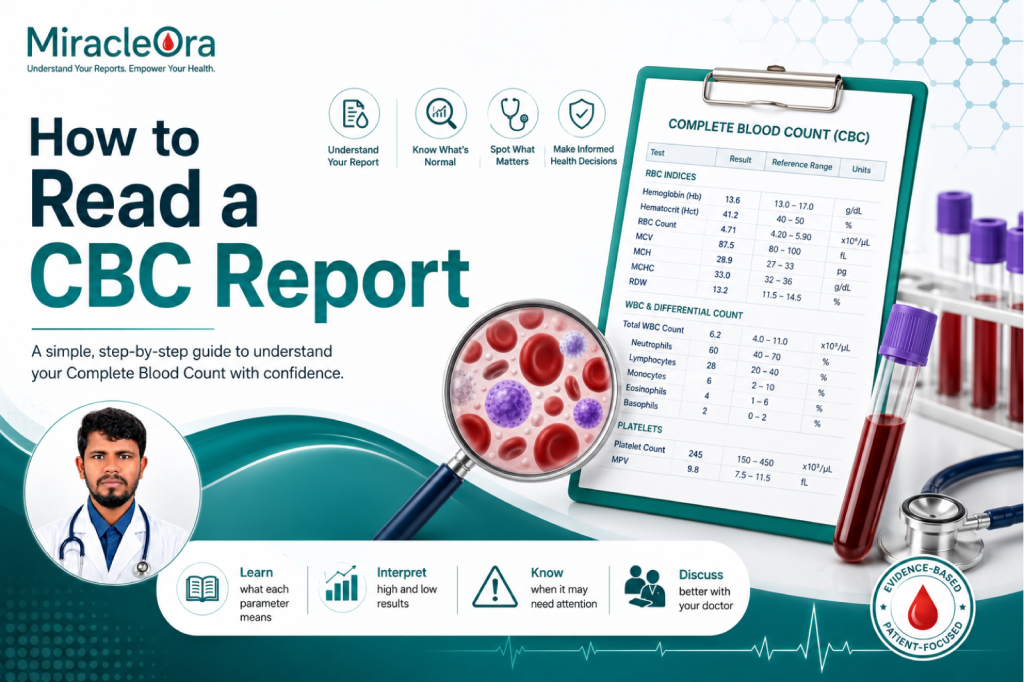
The general line-by-line walkthrough of a report is in how to read your CBC report, with the caveat that everything there is written for the non-pregnant adult range.
When to seek care rather than wait
Contact your maternity team promptly if:
- A result was reported to you as critical, or you were asked to act on it.
- You have new or worsening headache, visual disturbance, upper abdominal pain, sudden swelling of the face or hands, or a marked rise in blood pressure at home.
- You have unusual bruising, tiny red spots on the skin, bleeding gums, or bleeding that will not stop.
- You feel increasingly breathless, dizzy, faint, or your heart is racing.
- You have a fever, or reduced fetal movements.
Seek urgent care immediately for vaginal bleeding, severe abdominal pain, difficulty breathing, chest pain, confusion, fainting or seizures, whatever any blood result says.
Frequently asked questions
What is a normal hemoglobin in pregnancy?
ACOG and the CDC define anemia in pregnancy as hemoglobin below 11 g/dL in the first or third trimester and below 10.5 g/dL in the second. Those are thresholds used by clinicians rather than a target, and your laboratory’s printed range may be a general adult one. Your maternity clinician applies the right comparison for your trimester.
Why is my hemoglobin lower now than before pregnancy?
Plasma volume rises more than red cell mass during pregnancy, so red cell measurements read lower by dilution. That pattern is expected in a normal pregnancy, and it is not the same as iron-deficiency anemia. Distinguishing the two is exactly what your clinician does with the rest of the count.
Are low platelets in pregnancy dangerous?
ACOG defines thrombocytopenia as a platelet count below 150 x 10⁹/L and notes it occurs in 7 to 12 percent of pregnancies at delivery. Its guidance describes gestational thrombocytopenia as benign, while also setting out several other causes, some specific to pregnancy. That is why any low platelet count in pregnancy is assessed by your clinician rather than assumed to be one thing or the other.
Why is my white blood cell count high in pregnancy?
The white cell count typically runs higher during pregnancy, and higher again around labor. That means a raised count on its own is a weak signal of infection in pregnancy, and it is read alongside your symptoms and examination.
Do CBC reference ranges change each trimester?
The values themselves change across trimesters, and obstetric thresholds such as ACOG’s hemoglobin cutoffs differ by trimester. Whether your laboratory prints trimester-specific ranges varies by laboratory, so the report in your hand may still be scored against a general adult band.
Medical disclaimer: This article is provided by MiracleOra for general educational purposes only. It is not medical advice, diagnosis or treatment, and it does not interpret any individual person’s results. Pregnancy reference values shift by trimester and vary by laboratory, analyzer and population, so always compare your results to the range printed on your own report and discuss what they mean with the qualified healthcare professional managing your pregnancy. Never start, stop or change a supplement or medicine in pregnancy based on a blood result alone. If you have severe or worsening symptoms, seek urgent medical care. See our full Medical Disclaimer.