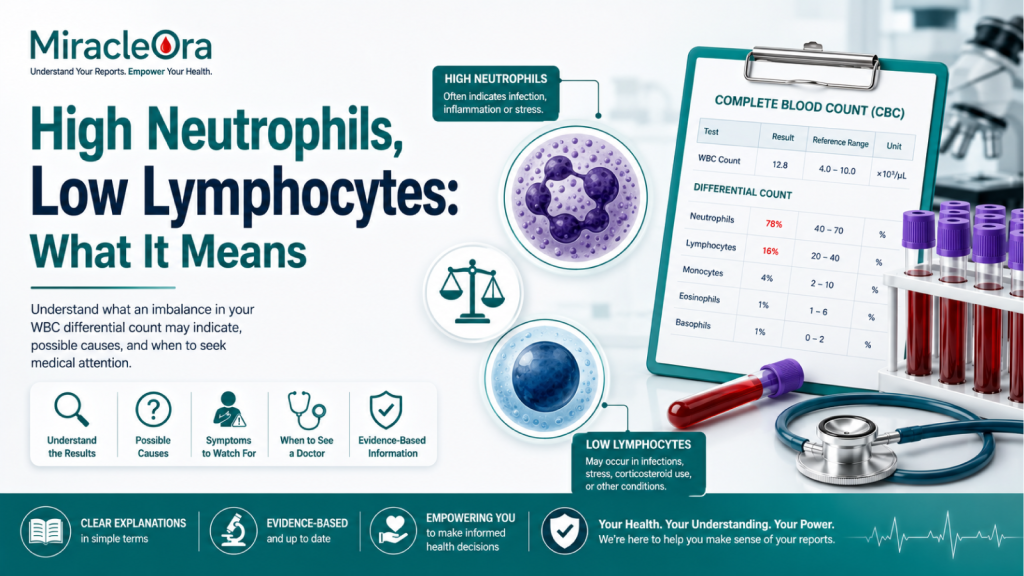
A blood test after illness can look different from your usual results, because the body's response to an infection shows up in the blood count and can carry into recovery. MedlinePlus lists viral infections among the causes of a low white blood cell count and bacterial infections among the causes of a high one. The NHLBI names influenza and the virus that causes COVID-19 among infections that can lower lymphocytes, and lists acute infection or inflammation among the causes of a short-term rise in platelets. A recent illness can explain a flag. Whether it explains yours, and whether a repeat test is needed, is a decision for the clinician who ordered it.
This guide shows which lines can move, why timing matters, what the online "wait two weeks" advice is based on, and how to give your clinician the recovery details that make a result easier to read.
Why a recent illness can show up on a CBC
A complete blood count (CBC) is a snapshot of the cells in your blood at the moment the sample was taken. During an infection, the body's defenses are working, and several of those cells are part of the response.
The clearest example is the white cell count. A review in American Family Physician by Riley and Rupert, Evaluation of Patients with Leukocytosis (published December 1, 2015, read on October 2, 2026), states plainly that "leukocytosis is one of the hallmarks of infection." Leukocytosis simply means a white count above the range. But the change does not always go up. MedlinePlus's WBC count page (reviewed February 3, 2025, read on October 2, 2026) lists viral infections and severe bacterial infections among the causes of a count below the range.
Other lines can shift as well, including lymphocytes, platelets and, in people who were seriously ill, hemoglobin. None of these changes by itself means the illness is still active. They mean the snapshot may have been taken while the body was still responding or settling.
What can shift after an illness, line by line
Most pages on this topic talk about "inflammation markers" in general. The table below goes line by line through a standard CBC and only includes what a named source states.
| Report line | What a recent illness can do | Source (read October 2, 2026) |
|---|---|---|
| White blood cells (WBC) | Higher with bacterial infection; lower with some viral infections and severe bacterial infections | MedlinePlus, WBC count (reviewed February 3, 2025) |
| Lymphocytes | Lower with infections including influenza, SARS-CoV-2, pneumonia, tuberculosis and sepsis | NHLBI, lymphocytopenia causes (updated May 31, 2022) |
| Platelets (PLT) | Higher for a short time with acute infection or inflammation, or during recovery from serious blood loss | NHLBI, thrombocytosis (updated March 24, 2022) |
| Hemoglobin | Lower in "anemia of critical illness," which develops quickly in people hospitalized for severe acute infections | NIDDK, anemia of inflammation (last reviewed September 2018) |
| White blood cells after bleeding | A "rebound leukocytosis" can occur during recovery after hemorrhage or hemolysis | American Family Physician (December 1, 2015) |
Two points stand out. First, the same illness can push different lines in different directions, so a high white count and a low lymphocyte count can appear on the same report. Second, the hemoglobin change in the NIDDK description applies to people who were hospitalized and seriously unwell, not to a typical cold.
White cells and lymphocytes: the lines that move most visibly
The white cell lines are the ones people most often notice after being sick, because they carry the H and L flags. MedlinePlus gives a normal WBC range of "4,500 to 11,000 WBCs per microliter," and notes that "normal value ranges may vary slightly among different labs." The range printed on your own report is the one that applies to your sample.
The NHLBI's lymphocytopenia causes page (last updated May 31, 2022, read on October 2, 2026) lists "influenza, SARS CoV-2 (the virus that causes COVID-19), tuberculosis, pneumonia, sepsis, or malaria" among the infections that can lower lymphocytes. The page does not say how long that effect lasts, and we have not found an authoritative source that gives a fixed recovery time, so this article does not offer one.
If lymphocytes are the flagged line, our guide on low lymphocytes and what lymphopenia can mean walks through the wider list of causes. If the total white count is high, our article on reactive versus serious high white counts explains how doctors tell a response to illness apart from other causes.
Why timing matters to the person reading your result
A single number tells a clinician less than a number with a date and a story. The American Family Physician review makes the point directly: "Leukocytosis lasting hours to days has a different differential diagnosis (e.g., infections, acute leukemias, stress reactions) than a case that persists for weeks to months (e.g., chronic inflammation, some malignancies)."
In plain terms, the length of time a change lasts is part of how it is read. A white count that was raised during a chest infection and settles afterward points somewhere different from one that stays raised long after you feel well. The same review notes that the initial evaluation of a raised white count "should include a repeat complete blood count to confirm the elevated WBC level."
That is one reason a clinician may ask for a repeat test. It is a way of adding a second date to the picture, not a sign that something serious has been found.
Should you wait to have a blood test after being sick?
Many websites suggest waiting one to two weeks after symptoms clear before a routine blood test. We looked for where that figure comes from. The sources that give it are mostly laboratory service companies and health-information blogs. We did not find a clinical guideline from MedlinePlus, the NHLBI or a professional society that sets one waiting period for everyone, and that is worth knowing before treating the figure as a rule.
What the authoritative sources do support is simpler:
- A recent infection is a known cause of changes in several CBC lines, so the timing of your test is relevant information.
- When a test was ordered to look at the illness itself, testing during the illness is the point, and the timing should follow the ordering clinician's instructions.
- When a test was meant to check your usual baseline, it is reasonable to ask the clinician whether to keep the appointment or move it. That is a question for them, not a rule from a website.
The recovery note: what to tell your clinician
Clinicians read results better when they know what happened before the sample. A short written note, kept with the report, gives them that context. It is the part most guides leave out.
- Dates: when symptoms started, when they ended, and the date of the blood test.
- The illness: what it was, if a clinician named it, and whether you had a fever.
- Care received: any hospital stay, any significant bleeding, and any medicines taken while unwell, including over-the-counter ones.
- Fluids: whether you were eating and drinking normally. Our article on dehydration and blood test results explains why this can matter.
- Earlier results: any CBC from before the illness, so the new result can be compared with your own baseline.
If you are wondering whether a CBC can show the infection itself, our guide on whether a CBC can detect infection explains what it can and cannot tell a clinician.
What a recent illness cannot explain on its own
It is tempting to put every flag down to the flu you had last month. That is sometimes right, and sometimes too quick. The American Family Physician review notes that a raised white count that persists for weeks to months has a different list of possible causes from one lasting hours to days. That is not a reason for alarm. It is the reason a clinician may want a second result once you are well, and the reason it is worth keeping the repeat appointment if one is offered.
Only the clinician who can see your history, examination and earlier results can say whether an illness accounts for a result.
When not to wait
Some situations call for care now, whatever your recent illness. MedlinePlus lists warning signs of a medical emergency in adults (reviewed January 8, 2025, read on October 2, 2026), including:
- Breathing problems, such as difficulty breathing or shortness of breath
- Chest pain or discomfort lasting two minutes or more
- Bleeding that will not stop
- Coughing up or vomiting blood
- Fainting or loss of consciousness
- A change in mental status, such as confusion or unusual behavior
- Severe or persistent vomiting or diarrhea
These call for emergency care. Outside an emergency, symptoms that return, worsen or are not settling during recovery are a reason to contact your clinician rather than wait for a scheduled repeat test. A laboratory report should not create fear; it should create understanding, and that understanding grows when the result is read alongside what your body has just been through.
This article is general information and cannot interpret your individual result. The clinician who ordered your test is the right person to explain what it means for you.
Frequently asked questions
Can a cold or flu affect a blood test?
Yes, it can. MedlinePlus lists viral infections among the causes of a low white cell count, and the NHLBI lists influenza among infections that can lower lymphocytes. Whether a recent illness explains your own result is a question for your clinician.
How long after being sick should I wait for a blood test?
We did not find an authoritative guideline that sets one waiting period for everyone. The one to two week figure often quoted online comes mainly from lab service companies. Ask the clinician who ordered the test whether to keep or move your appointment.
Can platelets be high after an infection?
Yes. The NHLBI lists acute infection or inflammation, and recovery from serious blood loss, among the causes of a platelet count that is high for a short time.
Why does my doctor want to repeat the test after I recover?
A repeat test adds a second date to the picture. The American Family Physician review notes that how long a change lasts helps narrow its possible causes, and it describes a repeat CBC as part of the initial evaluation of a raised white count.