The short answer: medications that affect platelets do it in two different ways. Some lower the platelet count, and a CBC will usually show that. Others leave the count normal but change how well platelets work, which a standard CBC does not measure. Aspirin and other anti-inflammatory pain relievers are well-known examples of the second kind, and MedlinePlus lists heparin, some antibiotics, seizure medicines and chemotherapy among the first. Any link between a medicine and bruising or bleeding is for the prescriber to assess. Nothing here is a reason to stop or change a medicine.
First: when bleeding or bruising needs a doctor now
The escalation rule comes first, because someone reading this with a new bruise needs it more than the explanation.
The National Heart, Lung, and Blood Institute (NHLBI) states on its thrombocytopenia page (last updated February 18, 2025, read on September 25, 2026): "Call 9-1-1 to seek immediate medical care if you have bleeding that does not stop when you apply pressure." NHLBI lists bleeding signs including prolonged bleeding from small cuts, tiny red spots called petechiae, larger purple patches called purpura, nosebleeds, bleeding gums, blood in urine or stool, and heavy menstrual bleeding.
For medicines specifically, the MedlinePlus Medical Encyclopedia entry on drug-induced thrombocytopenia (review date April 1, 2025, read on September 25, 2026) advises contacting a provider for unexplained bleeding or bruising while taking one of the medicines it lists. The MedlinePlus drug information page for sertraline (last revised October 15, 2025, read on September 25, 2026) lists "abnormal bleeding or bruising" among the side effects that warrant calling a doctor right away.
The same sertraline page also states: "Do not stop taking sertraline without talking to your doctor," and describes withdrawal symptoms that can follow stopping suddenly. That is one medicine, but the principle behind it runs through this whole page. A medicine was prescribed for a reason, and the prescriber is the person who can weigh that reason against a bleeding concern.
Two different ways medicines touch platelets
Platelets do two jobs a CBC treats very differently. The count says how many platelets are in the sample. Function is about how well each platelet sticks and clumps to seal a small break in a blood vessel. The CBC reports the first and says nothing about the second.
| Effect | What happens | Will a standard CBC show it? | Examples named by the sources below |
|---|---|---|---|
| Lower platelet count | The medicine destroys platelets or interferes with how they are made | Usually yes, as a low platelet line | Heparin, chemotherapy medicines, valproic acid, quinine, linezolid and others (MedlinePlus) |
| Changed platelet function | Platelets are present in normal numbers but work less well | No, the count can be normal | Aspirin, other NSAIDs, clopidogrel, prasugrel, ticagrelor (Merck Manual) |
This distinction is the information most pages on the topic skip, and it explains a common puzzle: a person who bruises more easily, gets a CBC, and is told the platelet count is normal. A normal count does not rule out a medicine effect on function, and it does not confirm one either. It simply answers a different question.
Medicines that can lower the platelet count
MedlinePlus defines drug-induced thrombocytopenia as a low platelet count that happens when medicines destroy platelets or interfere with the body's ability to make them. It names these among the medicines that can cause it:
- Heparin, a blood thinner
- Chemotherapy medicines
- Valproic acid, a seizure medicine
- Furosemide
- Gold, used for arthritis
- NSAIDs
- Penicillin
- Quinidine and quinine
- Ranitidine
- Sulfonamides
- Linezolid
- Statins
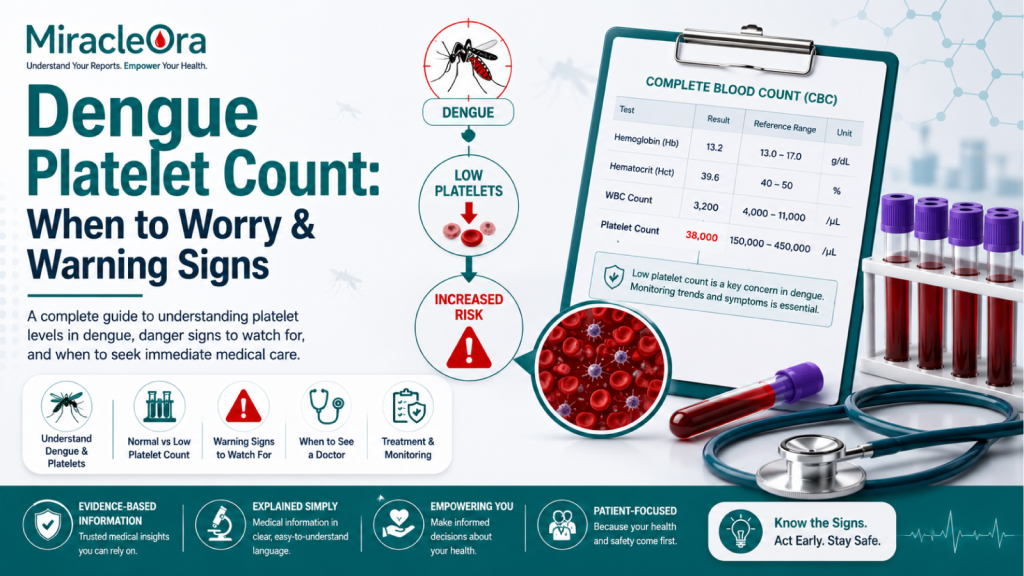
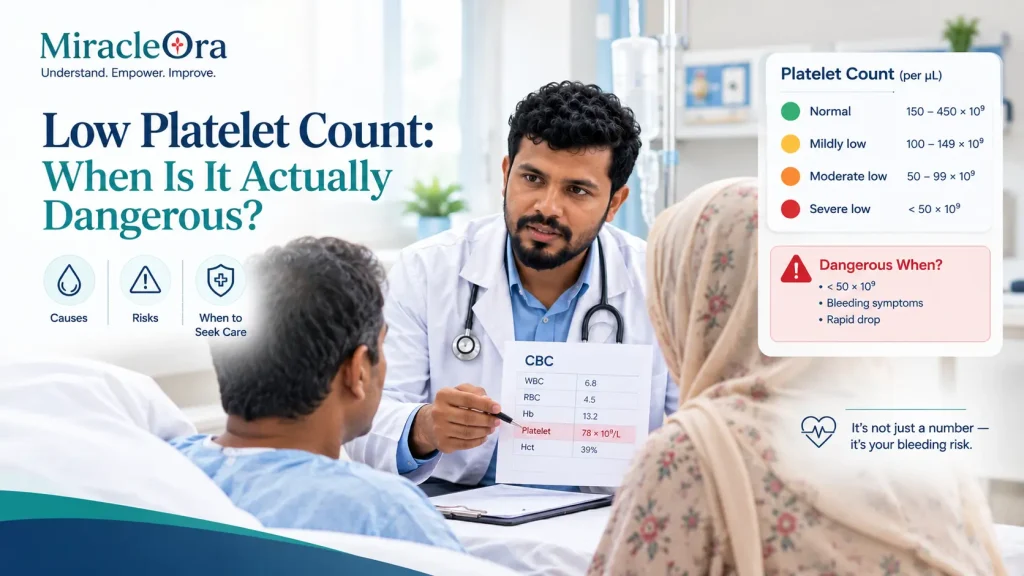
Two things are worth keeping calm about. First, this is a list of medicines that can cause the effect, not medicines that usually do. Most people taking them do not develop a low count. Second, a low count has many other causes. For how clinicians think about a low result in general, low platelet count: when is it actually dangerous walks through the wider picture.
Heparin deserves one extra sentence. NHLBI notes on its platelet disorder treatment page (last updated March 24, 2022, read on September 25, 2026) that in heparin-induced thrombocytopenia, or HIT, "a platelet transfusion can raise your risk of forming blood clots." HIT is usually recognized in hospital, where heparin is given, and it is managed by the hospital team.
Medications that affect platelets by changing how they work
The Merck Manual Professional Edition chapter on acquired platelet dysfunction (by David J. Kuter, MD, DPhil, last updated June 2026, read on September 25, 2026) names the main medicine groups that impair platelet function: "Aspirin, other NSAIDs, inhibitors of the platelet P2Y12 adenosine diphosphate (ADP) receptor (eg, clopidogrel, prasugrel, ticagrelor), and glycoprotein IIb/IIIa receptor inhibitors."
Some of these are prescribed precisely because they reduce platelet clumping. Clopidogrel, prasugrel and ticagrelor are antiplatelet medicines, and a reduced clotting tendency is their intended effect, not a side effect. That is one reason a bruise in someone taking them is a conversation for the prescriber rather than a signal to change anything.
Merck describes aspirin's effect as lasting 5 to 7 days, while the effect of other NSAIDs lasts less than a day. It also states: "Aspirin modestly increases bleeding in healthy people but may markedly increase bleeding in older patients and those with underlying platelet dysfunction." The same effect can matter more in one person than another, which is why the whole history matters.
Merck also notes that platelet function can be affected by conditions rather than medicines, including kidney failure with uremia, which it calls "probably the most common and significant," as well as liver cirrhosis, some bone marrow disorders and lupus. So even when a medicine is on the list, it may not be the explanation.
Antidepressants and over-the-counter combinations
The MedlinePlus sertraline page lists "aspirin and nonsteroidal anti-inflammatory drugs (NSAIDS) such as ibuprofen and naproxen" among products that may interact with sertraline, and asks people to tell their doctor and pharmacist about them. Over-the-counter pain relievers are easy to forget because they do not feel like "real" medicines. They are exactly the kind of detail a clinician needs.
What a clinician may look at
Merck states that acquired platelet dysfunction is "suspected and diagnosed when unusual or prolonged bleeding is observed and other possible diagnoses (eg, thrombocytopenia, coagulation abnormalities) have been eliminated." In practice that means the clinician usually starts with the CBC, may look at clotting tests, and reads both against the full medicine list and history.
Reference intervals for the platelet count are set by each laboratory, so the interval printed on your report is the one that applies to you. If you want to see where the platelet line sits among the other results, the CBC normal range chart lays out the whole report on one page, with the same caution about lab-specific ranges. If a blood smear was added, what a peripheral blood smear is and why it was ordered explains that step.
A useful list to bring
The most helpful thing a person can bring to this conversation is a complete, honest medicine list:
- Every prescription medicine, with the dose written on the label
- Every over-the-counter medicine, including pain relievers and cold remedies
- Vitamins, herbal products and supplements
- Any medicine started, stopped or changed in the past few months
- When the bruising or bleeding started, and where it shows up
- Recent CBC reports, with the lab's reference intervals printed on them
This list describes what is happening. It does not change anything. Decisions about any medicine belong to the person who prescribed it.
The honest limits of this page
A laboratory report should not create fear. It should create understanding. This page cannot tell anyone whether their medicine is causing their bruising, whether a count is low because of a medicine, or whether any medicine should be changed. It can explain why the answer to "could my medicine explain this?" depends on whether the question is about count or function, and why the prescriber is the right person to answer it.
Frequently asked questions
Which medications lower the platelet count?
MedlinePlus lists heparin, chemotherapy medicines, valproic acid, furosemide, gold, NSAIDs, penicillin, quinidine, quinine, ranitidine, sulfonamides, linezolid and statins among medicines that can cause drug-induced thrombocytopenia. Most people taking them do not develop a low count.
Can a medicine cause bruising if my platelet count is normal?
It can. The Merck Manual describes aspirin, other NSAIDs and antiplatelet medicines such as clopidogrel as affecting how platelets work rather than how many there are. A standard CBC does not measure platelet function, so a normal count does not settle the question.
How long does aspirin affect platelets?
The Merck Manual states that aspirin's effect on platelet function lasts 5 to 7 days, while the effect of other NSAIDs lasts less than a day.
Should I stop a medicine if I am bruising?
That decision belongs to the prescriber. MedlinePlus advises contacting a provider about unexplained bleeding or bruising on the medicines it lists, and its sertraline page warns against stopping that medicine without talking to a doctor.
When is bleeding on a medicine an emergency?
NHLBI states that bleeding that does not stop when pressure is applied needs immediate medical care, including calling 9-1-1 where that service exists. Blood in urine or stool and other bleeding signs warrant prompt contact with a care team.