The short answer: a heavy periods blood test usually starts with a complete blood count (CBC), which shows hemoglobin and the platelet count, often alongside an iron test, a thyroid test and, where relevant, a pregnancy test. MedlinePlus names all four. If the history suggests a bleeding disorder, clinicians may add clotting tests and more specialized ones. The blood work answers two different questions: has the bleeding affected the body, for example through anemia, and is something in the blood contributing to the bleeding? Reading the results belongs to the clinician who ordered them.
First: signs that need care soon
The MedlinePlus Medical Encyclopedia entry on vaginal or uterine bleeding (review date October 15, 2024, read on September 25, 2026) lists reasons to contact a medical professional, including:
- "You have soaked through a pad or tampon every hour for 2 to 3 hours."
- "Your bleeding lasts longer than 1 week."
- "You have vaginal bleeding and you are pregnant or could be pregnant."
- "Bleeding increases or becomes severe enough to cause weakness or lightheadedness."
- "You have fever or pain in the lower abdomen."
- "You have bleeding or spotting after reaching menopause."
Heavy bleeding with fainting, chest pain, a racing heart or trouble breathing is a reason for emergency care, not a routine appointment. So is heavy bleeding in someone who is or could be pregnant. This page cannot triage anyone, and a clinician or emergency service can.
What counts as a heavy period
The US Centers for Disease Control and Prevention (CDC), on its heavy menstrual bleeding page (last reviewed May 15, 2024, read on September 25, 2026), states that "Periods that last for more than 7 days are considered heavy," as are periods that "require a new tampon or pad after less than 2 hours or involve passing large clots." CDC also describes soaking through one or more pads or tampons every hour for several hours, clots the size of a quarter or larger, and tiredness or shortness of breath as signs of heavy bleeding.
It is common. CDC states that heavy menstrual bleeding "affects more than 10 million American women each year."
Many people have lived with heavy periods for so long that they no longer seem unusual. That is one reason the blood test can be useful: it can show effects that the person has quietly adapted to.
The tests most often ordered
MedlinePlus names four blood tests for abnormal uterine bleeding: an iron level, a CBC, thyroid function tests and a pregnancy test. CDC similarly describes blood being taken to check for anemia, thyroid problems and clotting problems. Here is what each part is looking for.
| Test | What it is looking for | Why it matters with heavy periods |
|---|---|---|
| CBC: hemoglobin and hematocrit | Whether the blood is carrying less oxygen than expected | Blood loss over months can lower hemoglobin |
| CBC: red cell indices such as MCV | The size and fill of red cells | Iron deficiency often makes red cells smaller and paler |
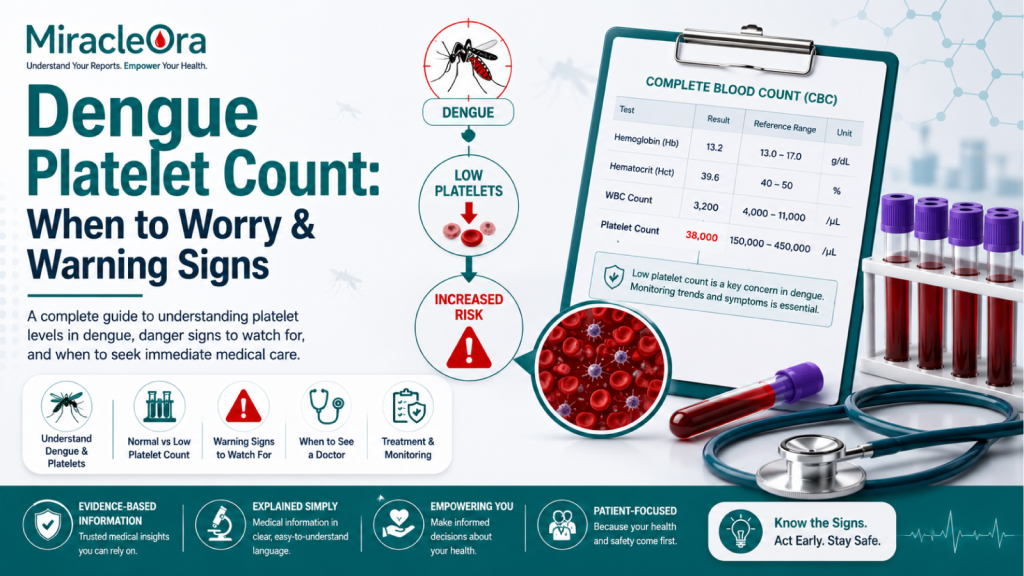
| CBC: platelet count | How many platelets are present | A low count can itself contribute to heavier bleeding |
| Iron studies, often including ferritin | How much iron the body has in use and in store | Iron can run low before hemoglobin falls |
| Thyroid function tests | How the thyroid is working | CDC lists hormone problems among the causes of heavy bleeding; thyroid problems are one of the things CDC says the blood test checks |
| Pregnancy test | Whether pregnancy is involved | CDC lists pregnancy-related complications among causes of heavy bleeding |
Two of these deserve a closer look.
Hemoglobin and iron. Hemoglobin shows whether anemia is present now. Iron tests, and ferritin in particular, show whether iron stores are running low, which can happen before hemoglobin drops. What the iron-store number means is explained in the ferritin blood test and what it measures, and the typical pattern a clinician looks for is set out in the iron deficiency anemia blood test pattern.
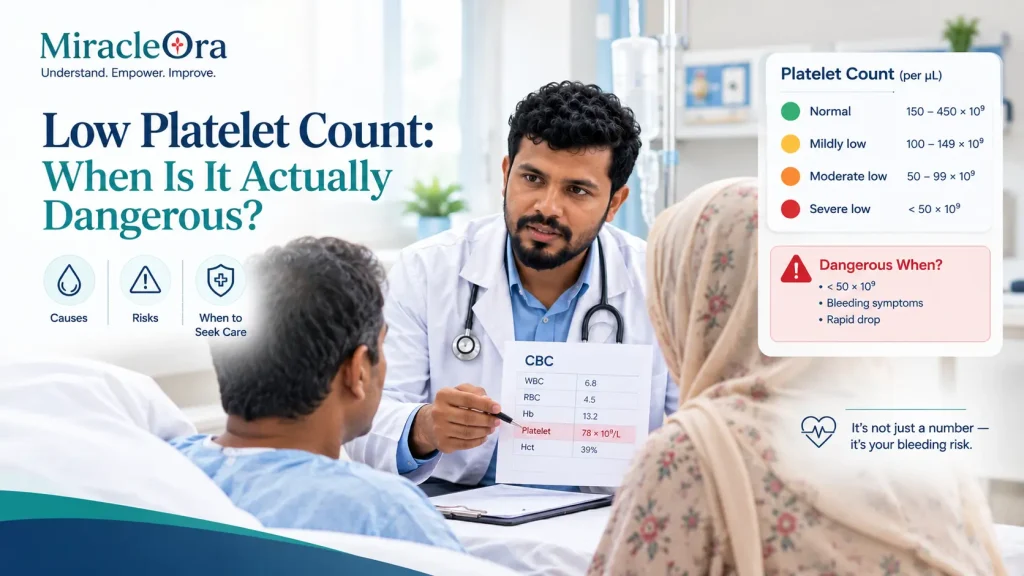
The platelet count. This is the line most people skip on a heavy-period CBC. The National Heart, Lung, and Blood Institute (NHLBI), on its thrombocytopenia page (last updated February 18, 2025, read on September 25, 2026), lists heavy menstrual bleeding among the bleeding signs of a low platelet count, alongside nosebleeds, bleeding gums, easy bruising and tiny red spots called petechiae. If the platelet line is flagged low, low platelet count: when is it actually dangerous explains how that result is usually weighed.
Reference intervals for every one of these tests are set by each laboratory. The interval printed on your own report is the one that applies to you.
The heavy periods blood test works in two directions
This is the point most pages on the topic leave out, and it explains why one set of results can lead to more tests.
Direction one: the effect of the bleeding. A low hemoglobin or low iron stores can be a consequence of losing blood every month. Here the blood test is measuring damage.
Direction two: a cause of the bleeding. A low platelet count, or a clotting problem that a standard CBC does not show, can make periods heavier. Here the blood test is looking for a contributor.
The second direction is easy to miss, because a normal CBC can look reassuring. But a normal platelet count does not rule out a bleeding disorder. The US Office on Women's Health (womenshealth.gov, page last revised February 22, 2021, read on September 25, 2026) states that "As many as one in 10 women with heavy menstrual periods may have a bleeding disorder," and that von Willebrand disease "is the most common inherited bleeding disorder in women in the United States." CDC lists both von Willebrand disease and platelet function disorders among the causes of heavy menstrual bleeding. These conditions affect how blood clots, not necessarily how many platelets there are.
The Office on Women's Health lists signs of a bleeding disorder, including "Large bruises from a minor bump or injury," "Nosebleeds that are difficult to stop or happen often," and heavy menstrual bleeding, and notes that specialized blood tests can detect specific bleeding disorders. Whether those tests make sense for a given person is a decision for the clinician, based on the history as much as the CBC.
Other causes the blood test does not see
CDC lists causes of heavy menstrual bleeding that are not in the blood at all: fibroids, polyps and other problems of the uterus, hormone imbalances such as polycystic ovary syndrome, certain medicines including aspirin and anticoagulants, and, less commonly, cancer. CDC notes that clinicians may also use a pelvic ultrasound, a Pap test or an endometrial biopsy.
That list can feel alarming, and it helps to see it for what it is: the range of possibilities a clinician works through, not a list of what anyone has. The blood test is one layer of that work. A normal result does not end the conversation, and an abnormal one does not settle it.
On the medicine point, the CDC entry describes a known association. It is not a reason to stop or change any medicine. That decision belongs to the prescriber.
If anemia shows up
A low hemoglobin after months of heavy periods is common, and it can explain symptoms people had put down to a busy life. Tiredness, breathlessness on stairs and headaches are among the symptoms discussed in low hemoglobin symptoms. The right next steps, including whether iron treatment is needed and how the bleeding itself is managed, are for the clinician to decide. This page does not suggest any treatment or dose.
Making the appointment more useful
A few notes before the visit can make the blood test results easier to read in context:
- How many days your period lasts, and how often you change pads, tampons or cups on the heaviest days
- Whether you pass clots, and roughly how large
- Whether periods have always been heavy, or have changed
- Any easy bruising, nosebleeds, or heavy bleeding after dental work, surgery or childbirth
- Any relatives with a known bleeding problem
- Every medicine and supplement you take
- Copies of any past blood tests, so the trend is visible
This list is for describing what is happening. Decisions about testing and treatment belong to the clinician.
The honest limits of this page
A laboratory report should not create fear. It should create understanding. This page cannot say why your periods are heavy, whether your results are normal for you, or which further tests you need. It can explain what each common test is looking for, why a normal CBC does not always close the question, and which signs mean the next appointment should be sooner rather than later.
Frequently asked questions
What blood tests are done for heavy periods?
MedlinePlus names an iron level, a complete blood count, thyroid function tests and a pregnancy test. CDC adds that blood tests can check for clotting problems. The clinician chooses which tests fit the history.
Can heavy periods cause anemia?
They can. Losing blood every month can lower iron stores and then hemoglobin. CDC lists tiredness and shortness of breath among signs linked with heavy bleeding, and a CBC with iron studies is how anemia and low iron are checked.
Why would a doctor check platelets for heavy periods?
NHLBI lists heavy menstrual bleeding among the bleeding signs of a low platelet count. Checking the count helps show whether platelets may be contributing to the bleeding.
Can a bleeding disorder cause heavy periods with a normal CBC?
Yes. The Office on Women's Health states that as many as one in 10 women with heavy periods may have a bleeding disorder, most commonly von Willebrand disease, which affects clotting rather than platelet numbers. Specialized tests are used when the clinician suspects it.
When is a heavy period an emergency?
MedlinePlus lists soaking a pad or tampon every hour for 2 to 3 hours, bleeding with pregnancy, and bleeding severe enough to cause weakness or lightheadedness among reasons to contact a professional. Fainting, chest pain or trouble breathing with heavy bleeding warrants emergency care.