The ESR vs CRP blood test question has a short answer: both are general markers of inflammation, but they measure it in different ways. CRP (C-reactive protein) is a protein the liver makes in response to inflammation, so the test measures that protein directly. ESR (erythrocyte sedimentation rate) measures how quickly red blood cells settle in a tube, which inflammation speeds up indirectly. Neither test says what is causing inflammation or where it is. They are clues that your clinician reads alongside your symptoms, examination and other results, including the CBC they were often ordered with.
If two extra lines appeared on your report next to your blood count, this article explains what each one is measuring, why they do not always agree, and when symptoms matter more than either number.
What the ESR measures
MedlinePlus, the U.S. National Library of Medicine's consumer health site, describes the ESR in its erythrocyte sedimentation rate test guide (updated December 2, 2024, read on October 2, 2026) as "the time it takes for your red blood cells to settle at the bottom of a test tube." When inflammation is present, red cells tend to clump together and sink faster than usual.
A 2015 review in Australian Prescriber by Michael Harrison, "Erythrocyte sedimentation rate and C-reactive protein" (read on October 2, 2026), explains the mechanism in more detail. During inflammation, the sedimentation rate is affected by rising levels of fibrinogen, a clotting protein, and other proteins in the plasma. Harrison notes that the result is also influenced by "plasma albumin concentration," by "normal and abnormal immunoglobulins," and by the "size, shape and number of red blood cells."
That last point is the bridge to your CBC. Because the ESR is a measurement of red cells falling through plasma, changes in the red cells themselves can change the ESR, separately from inflammation.
MedlinePlus notes that the ESR is used with other tests to help diagnose and monitor conditions that cause inflammation, such as arthritis, vasculitis, infections and inflammatory bowel disease, and states plainly that "an ESR test alone cannot diagnose which condition is causing the inflammation."
What the CRP measures
MedlinePlus's C-reactive protein test page (updated June 11, 2025, read on October 2, 2026) explains that "your liver makes CRP in response to inflammation." The test measures how much of that protein is in your blood. MedlinePlus lists infections, autoimmune disorders, inflammatory bowel disease and lung diseases among the conditions that can raise CRP, and adds that smoking and exposure to environmental toxins can raise it too.
Its most important limit is the same as the ESR's. In MedlinePlus's words, CRP results "tell you how much inflammation you have in your body, but not what's causing it or where it is."
Harrison's review describes how quickly CRP moves. It "has a doubling time and a decay time of around six hours, and maximal concentrations are reached in less than two days." After inflammation resolves, Harrison writes, "concentrations fall rapidly."
CRP and hs-CRP are not the same test
You may also see "hs-CRP" on some reports. MedlinePlus explains that the high-sensitivity test measures "very tiny increases" in CRP and is used to estimate the risk of heart disease. It answers a different question from the standard CRP ordered to look for active inflammation, so the two are not interchangeable.
ESR vs CRP blood test: the key differences side by side
| ESR | CRP | |
|---|---|---|
| What it measures | How fast red cells settle in a tube | The amount of one inflammation protein |
| Direct or indirect | Indirect | Direct |
| How it changes | Shaped by plasma proteins and red cells | Doubles and decays in about six hours, per Harrison |
| Red cells part of the measurement | Yes: size, shape and number, per Harrison | No, it measures a protein |
| Shows the cause or location | No | No |
Harrison's overall view is that CRP is generally the better indicator of inflammation, being more sensitive and quicker to respond to changes, while false negative and false positive results are more common with the ESR. He also describes situations where the ESR can be the more useful marker, including low-grade bone and joint infections and some people with systemic lupus erythematosus. That is one reason clinicians still order both.
Why a "normal" ESR or CRP can differ from person to person
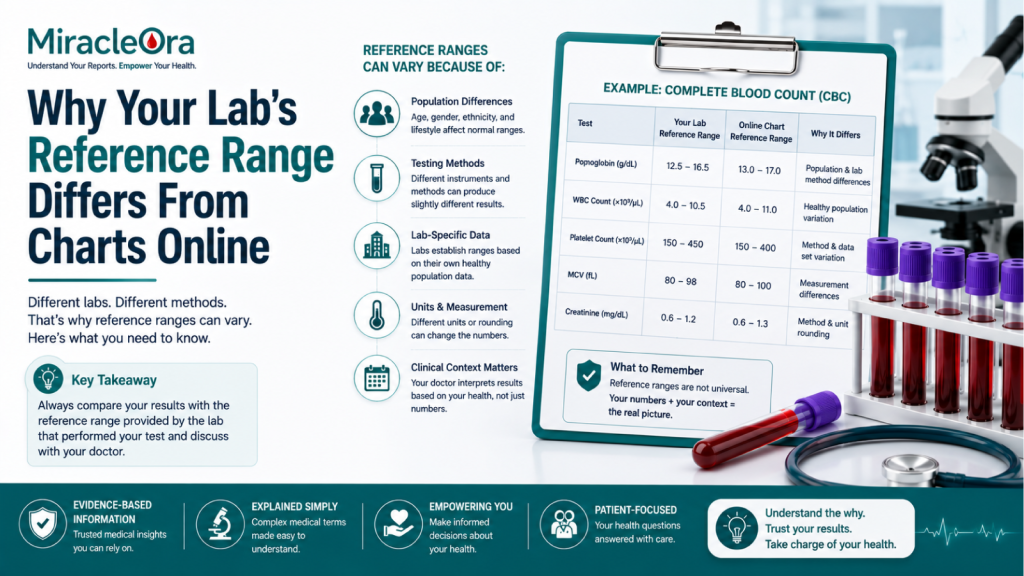
Neither test has one universal reference range. Ranges are set by each laboratory, and both markers vary with personal factors that have nothing to do with acute illness.
For the ESR, MedlinePlus lists pregnancy, the menstrual cycle, aging, obesity, regular alcohol use, exercise and certain medicines and supplements as factors that can affect results. Harrison adds that kidney failure, obesity, aging and female sex are associated with higher sedimentation rates. MedlinePlus also notes that a low ESR can occur with some blood conditions, such as polycythemia or sickle cell disease, which is another example of red cells shaping the result.
For CRP, MedlinePlus lists insomnia, depression, hormone therapy, obesity and sex as factors that can influence levels, and notes that "females often have slightly higher CRP levels than males."
This is why the number to compare is the range printed on your own report, interpreted by the clinician who knows your history.
When ESR and CRP disagree
It surprises many people that the two tests can point in different directions on the same day. Harrison's review addresses this directly:
- High CRP with a normal ESR. Harrison writes that these patients "usually have infection but some have other tissue damage," giving heart attack and blood clots in the veins as examples.
- High ESR with a normal CRP. Harrison notes that this pattern is mostly seen in conditions without demonstrable whole-body inflammation. Because the ESR also reflects red cells, plasma proteins, age, sex and kidney function, a raised ESR on its own can have several explanations, some of which need further investigation and many of which do not.
The pattern on its own does not diagnose anything. It is one more piece of information your clinician weighs, often together with the history, an examination and, where needed, other tests.
How ESR and CRP relate to the CBC beside them
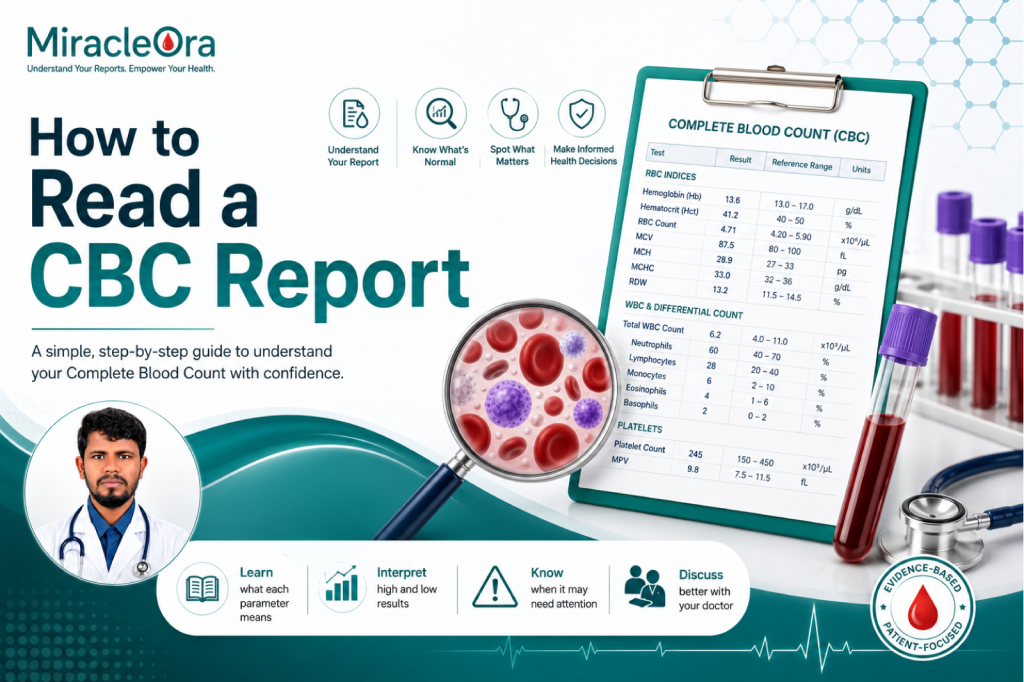
ESR and CRP often appear on the same request as a complete blood count, and MedlinePlus notes that a CRP test "is commonly done with an ESR to provide more information." Together they give a broader view than any one test: the CBC describes the cells themselves, while ESR and CRP describe whether a general inflammatory response is present.
Some practical connections are worth knowing:
- A white cell count can rise for many reasons, and our article on reactive versus serious high white cell counts explains how clinicians tell them apart. An inflammation marker can add context to that picture, but cannot settle it alone.
- If you are wondering whether these tests show infection, our guide on whether a CBC can detect infection covers what blood counts can and cannot tell you.
- Inflammation also comes up when iron results are read. Our explainers on the ferritin blood test and on anemia of chronic disease versus iron deficiency describe how clinicians look at iron numbers alongside the broader clinical picture.
Because the ESR depends partly on the size, shape and number of red cells, a CBC that shows changes in red cells is one of the things your clinician may consider when reading an ESR.
When symptoms matter more than the numbers
An ESR or CRP result is rarely the reason to act urgently by itself; symptoms are. MedlinePlus lists warning signs of a medical emergency in adults (page reviewed January 8, 2025, read on October 2, 2026), including:
- Breathing problems, such as difficulty breathing or shortness of breath
- Chest pain or discomfort lasting two minutes or more
- A change in mental status, such as confusion or unusual behavior
- Fainting or loss of consciousness
- Sudden, severe pain anywhere in the body
- Severe or persistent vomiting or diarrhea
- Bleeding that will not stop
These call for emergency care regardless of any lab value. Outside emergencies, symptoms that are new, getting worse or worrying you are a reason to contact the clinician who ordered the tests rather than waiting for a scheduled review. And if the clinic asks you to come in sooner, that request comes from someone who can see your full record.
Any decision about medicines that might be affecting these results belongs with your prescriber, not with a single number on a report.
Questions to bring to the clinician who ordered the tests
- What were you looking for when you ordered ESR and CRP together?
- How far from my lab's range are these results, and does that matter for me?
- If they disagree, what does that pattern suggest in my situation?
- Do any of my CBC results affect how you read the ESR?
- Will these be repeated to see how they change, and when?
A laboratory report should not create fear; it should create understanding. ESR and CRP are signposts that inflammation may be present, not answers about why. This article is general information and cannot interpret your individual results; the clinician who ordered your tests is the right person to explain what they mean for you.
Frequently asked questions
Which is better, ESR or CRP?
They answer slightly different questions. A 2015 Australian Prescriber review by Harrison describes CRP as generally the more sensitive and faster-responding marker, while noting that the ESR can be more useful in some situations, such as low-grade bone and joint infections and some cases of lupus. Clinicians often order both.
Can ESR or CRP tell where inflammation is?
No. MedlinePlus states that CRP results show how much inflammation is present "but not what's causing it or where it is," and that an ESR test alone cannot diagnose which condition is causing inflammation. Your clinician uses them with your history, examination and other tests.
Why is my ESR high when my CRP is normal?
Several things can cause that pattern. Harrison's review notes that ESR is influenced by plasma proteins and by the size, shape and number of red blood cells, and that kidney failure, obesity, aging and female sex are associated with higher rates. Your clinician is the right person to say which explanation fits your results.
Is hs-CRP the same as a CRP test?
No. MedlinePlus explains that hs-CRP measures very small increases in CRP and is used to estimate heart disease risk, while the standard CRP test is used to look for inflammation from conditions such as infections or autoimmune disorders.