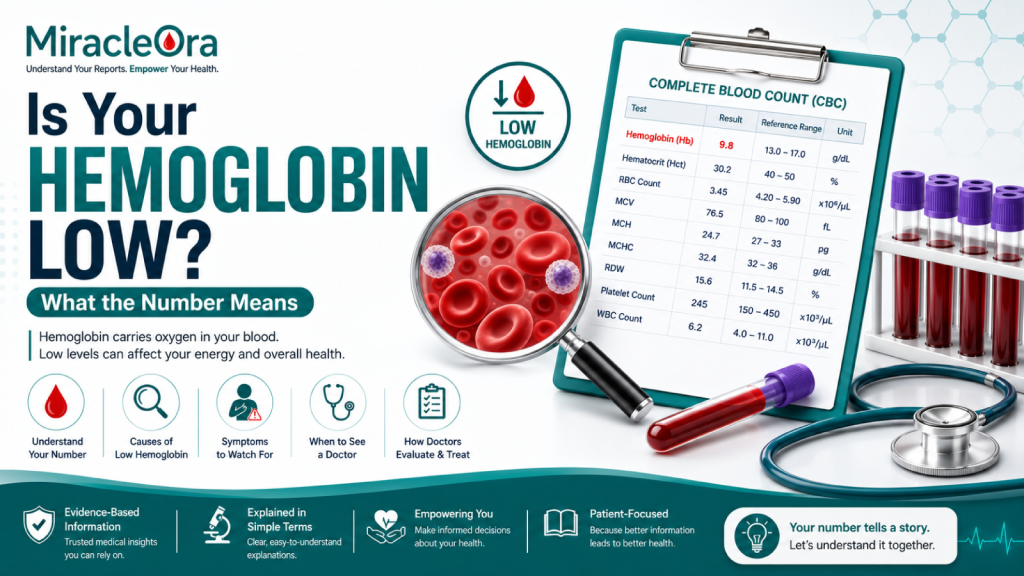
Iron-deficiency anemia has a recognizable laboratory signature: a low hemoglobin with small red cells (a low MCV), pale red cells (a low MCH and MCHC), and a raised RDW showing the cells vary in size. The confirming test is usually ferritin, which reflects your iron stores, supported by serum iron, total iron-binding capacity (TIBC) and transferrin saturation. As reported by MedlinePlus, the serum ferritin level correlates with the amount of iron stored in the body, and a lower-than-normal ferritin can indicate iron-deficiency anemia. No single value settles it on its own, and the pattern is read as a set.
This is general health education, not medical advice. It cannot confirm iron deficiency in your case, and it is not a reason to start taking iron. Take your results to your doctor.
The signature on a CBC
Your complete blood count shows the consequences of low iron on the cells the marrow is building. Iron is a building block of hemoglobin, so when it runs short, the marrow produces cells that are smaller and carry less hemoglobin than usual.
| Value on your CBC | Typical direction in iron deficiency | What it is telling you |
|---|---|---|
| Hemoglobin (Hb) | Low | Less oxygen-carrying capacity overall |
| MCV (average cell size) | Low (microcytic) | The cells being built are smaller than expected |
| MCH and MCHC | Low (hypochromic) | Each cell carries less hemoglobin, so cells look pale |
| RDW (size variation) | Raised | New small cells mixed with older normal ones |
| RBC count | Often low | Fewer cells in circulation |
| Platelets | Sometimes raised | A recognized reactive response to iron deficiency |
MCV reference range as reported by NIH/NCBI StatPearls (80 to 100 fL for adults). The microcytic and hypochromic pattern is the standard description in clinical references including Medscape’s iron-deficiency anemia workup. On the platelet row, NIH/NCBI StatPearls (“Secondary Thrombocytosis”) describes iron deficiency as an established cause of reactive thrombocytosis, a raised platelet count occurring in response to an underlying condition.
Two of those rows deserve emphasis. RDW often rises early, before the MCV has clearly fallen, because the marrow is producing new small cells alongside older normal ones, widening the size distribution. And the platelet clue is one many readers notice and misinterpret: a mildly raised platelet count alongside microcytic anemia is a familiar combination, not a separate emergency.
For the wider picture of how size categories work, see our overview of the types of anemia, and for the RDW pattern specifically, a high RDW with a normal MCV.
The confirming tests
A CBC suggests the pattern. The iron studies test it directly.
| Test | Typical direction in iron deficiency | What it measures |
|---|---|---|
| Ferritin | Low | Stored iron in the body |
| Serum iron | Low | Iron circulating in the blood right now |
| TIBC (total iron-binding capacity) | High | How much capacity is available to carry iron, which rises when stores are empty |
| Transferrin saturation | Low | The proportion of that carrying capacity actually in use |
Ferritin behavior as reported by MedlinePlus, “Ferritin Blood Test”: ferritin correlates with stored iron, and the lower the level, even within the normal range, the more likely it is that the person does not have enough iron stored.
Ferritin carries the most weight of the four, because it is the only one that reports on stores rather than on the moment. Serum iron alone is a poor guide, since it fluctuates through the day and with recent meals.
Iron deficiency has stages, and anemia is the last one
This is the part that resolves most of the confusion readers bring to their results.
Iron deficiency does not appear all at once. It develops in sequence:
- Stores fall. Ferritin drops while everything else still looks normal. The body is drawing down its reserve.
- Supply to the marrow tightens. Serum iron falls, TIBC rises, transferrin saturation falls. The marrow starts building cells under constraint. Hemoglobin may still be in range.
- Anemia appears. Hemoglobin finally falls below the reference range, and the cells become visibly small and pale.
Two practical consequences follow. First, you can be iron deficient without being anemic, which is why a person with a completely normal CBC can still have a genuinely low ferritin, and why some clinicians check ferritin in people with symptoms even when the blood count looks fine. Second, the CBC is a late indicator. By the time hemoglobin has fallen, the process has usually been running for a while.
This staging also explains why treatment response is monitored over weeks rather than days, and why stores take longer to refill than hemoglobin takes to recover.
When a normal ferritin does not settle it
Ferritin has a complication worth knowing about: it is an acute-phase reactant. Its level rises with inflammation, infection, liver disease and some chronic conditions, independently of how much iron is actually stored.
The practical effect is that inflammation can lift ferritin into the normal range while iron stores are genuinely depleted. Someone with a chronic inflammatory illness and iron deficiency can therefore produce a ferritin result that looks reassuring and is not. This is why clinicians interpret ferritin against the clinical context, often alongside an inflammation marker such as CRP, and why transferrin saturation is useful when ferritin is ambiguous.
The mirror image also exists. Anemia of chronic disease can produce low serum iron with a normal or raised ferritin, because iron is present but locked away from the marrow. Distinguishing that from true iron deficiency changes the treatment entirely, and it is one of the more common sources of a confusing set of results. If your hemoglobin is low but your cell size is normal, our page on low hemoglobin with a normal MCV covers how that branch is worked through.
What the blood smear adds
When a laboratory reviews a film manually, iron deficiency has a characteristic appearance: small red cells with enlarged pale centers, and variation in both size and shape. Reports may use the terms microcytosis, hypochromia, anisocytosis (variation in size) and poikilocytosis (variation in shape).
Those words describe what the cells look like. They are supporting evidence, not a separate diagnosis, and they can appear in other conditions too. Our page on the peripheral blood smear explains why one gets ordered and what the review adds.
The question the tests cannot answer: why is the iron low?
Confirming iron deficiency is the beginning of the important question, not the end of it. Iron runs low for three broad reasons: not enough coming in, not enough being absorbed, or too much being lost.
- Intake. Diets low in absorbable iron, and periods of high demand such as pregnancy, infancy and adolescent growth.
- Absorption. Conditions affecting the gut, including celiac disease, and some medicines and surgical changes that reduce absorption.
- Loss. Heavy menstrual periods, and slow bleeding anywhere in the digestive tract, which can produce no visible sign at all.
This is why doctors treat unexplained iron deficiency as something to investigate rather than simply to supplement, particularly in men and in women after menopause, where blood loss from the digestive tract is a recognized concern. Correcting the number without finding the reason can mean a real cause goes unexamined. The Cluster 2 pillar on what a low hemoglobin means sets out the same principle: the cause outranks the number.
When to see a doctor
Book an appointment to review any low hemoglobin or low ferritin result, and tell your doctor about heavy menstrual periods, changes in bowel habit, indigestion, or a family history of gut conditions, since these shape the investigation.
Seek urgent or emergency care for chest pain, severe or sudden shortness of breath, fainting, a very fast or irregular heartbeat, vomiting blood, black tarry stools, or visible heavy bleeding. As reported by Cleveland Clinic and Mayo Clinic patient resources, these can indicate a rapid fall in hemoglobin or active bleeding and are assessed immediately.
One further caution: do not start iron supplements on your own to correct a number. If iron deficiency is not the cause, they will not help, they can cause side effects, and they can blur the results your doctor needs in order to find the real reason.
Frequently asked questions
What blood test confirms iron deficiency anemia?
A CBC shows the pattern (low hemoglobin, low MCV, low MCH and MCHC, raised RDW), and iron studies confirm the cause. Ferritin is the most informative single test because it reflects stored iron, as reported by MedlinePlus, and it is usually read alongside serum iron, TIBC and transferrin saturation.
Can you have iron deficiency with a normal hemoglobin?
Yes. Iron stores fall before hemoglobin does, so ferritin can be low while the CBC still looks normal. This is iron deficiency without anemia, and it can still cause symptoms.
Why is my ferritin normal if I am iron deficient?
Ferritin rises with inflammation, infection and some chronic conditions, which can push it into the normal range while stores are actually depleted. Clinicians interpret ferritin alongside inflammation markers and transferrin saturation for exactly this reason.
Does a high platelet count with anemia mean something serious?
Not usually on its own. As reported by NIH/NCBI StatPearls, iron deficiency is a recognized cause of reactive thrombocytosis, so a mildly raised platelet count alongside microcytic anemia is a familiar combination. Your doctor still interprets it in context.
How long does it take for blood tests to improve with treatment?
That depends on the cause, the treatment chosen and how depleted the stores were, so your doctor sets the follow-up interval. In general, hemoglobin responds before stores are refilled, which is why repeat testing is scheduled rather than immediate.
Medical disclaimer: This content is for general education only and is not a substitute for professional medical advice, diagnosis, or treatment. It cannot confirm iron deficiency in your case and it is not guidance to take iron. Always talk to a qualified healthcare provider about your own results, and seek urgent care for the emergency features described above. See our full Medical Disclaimer.