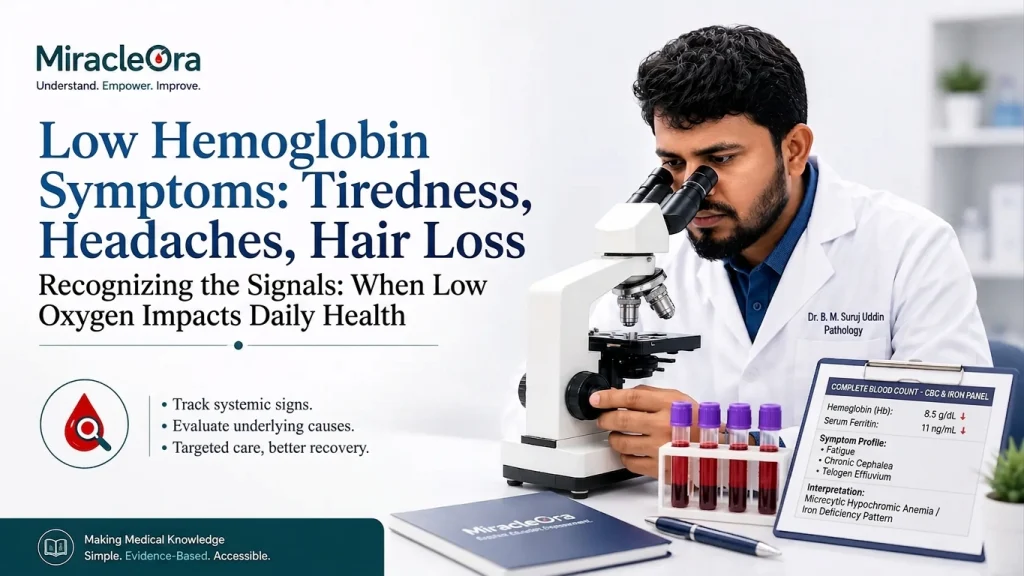
Yes, all three appear on official symptom lists. MedlinePlus and the NHLBI list tiredness and headaches among the symptoms of anemia, and MedlinePlus and the NHS list hair loss among the symptoms of iron deficiency anemia. None of the three is specific to low hemoglobin, and none of them can tell you what your number is.
That last point is what this page is built around. A symptom can send you for a blood test. It cannot replace one, and it cannot read the result for you.
When to contact a doctor, before anything else
The escalation rule comes first, because it is the part that matters most if you feel unwell right now.
MedlinePlus's anemia page (review date 29 January 2026, read 11 September 2026) states: "Contact your provider if you have any symptoms of anemia or unusual bleeding."
Its iron deficiency anemia page (reviewed 1 April 2025, read 11 September 2026) adds a specific trigger: contact your provider if you notice blood in your stool, or stool with a black, tar-like appearance.
The NHS page on iron deficiency anemia (last reviewed 26 January 2024, read 11 September 2026) gives the same routing in its own words: see a GP if you think you might have it.
If you feel too unwell to wait for an appointment, go to the nearest hospital emergency department. A web page is not the place to decide whether a symptom can wait.
Low hemoglobin symptoms on the official lists
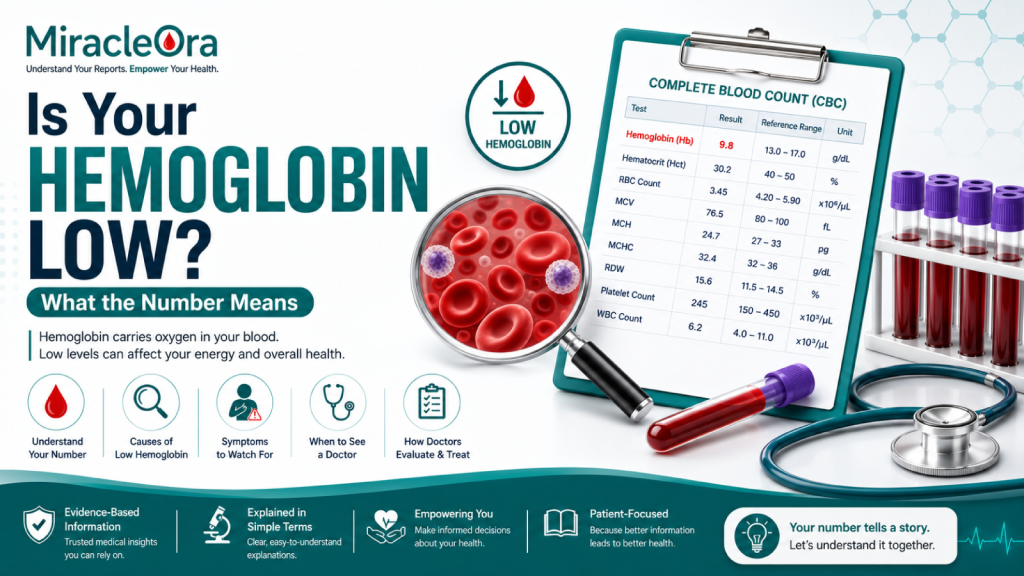
Hemoglobin is the protein in red blood cells that carries oxygen around the body. Cleveland Clinic's page on low hemoglobin (updated 4 May 2022, read 11 September 2026) explains that when it is low, the body is not getting enough oxygen, which can leave a person feeling very tired and weak.
The table below shows which sources name each symptom. It is built only from the pages cited on this page, all read on 11 September 2026.
| Symptom | Where it appears | Type of list |
|---|---|---|
| Tiredness, weakness | MedlinePlus anemia page, NHLBI, WHO, NHS | General anemia lists |
| Headaches | MedlinePlus anemia page (milder stage), NHLBI, NHS | General anemia lists |
| Dizziness, light-headedness | MedlinePlus, NHLBI, WHO | General anemia lists |
| Shortness of breath | MedlinePlus, NHLBI, WHO (especially on exertion), NHS | General anemia lists |
| Hair loss | MedlinePlus iron deficiency page (as it becomes more severe), NHS | Iron deficiency lists only |
The pattern in that table is the most useful thing on this page. Tiredness and headaches belong to anemia in general. Hair loss appears on the iron deficiency pages, and not on the general anemia lists we read. That points to a slightly different question, which the hair loss section below takes up.
Tiredness: the most common symptom and the least specific
Every source we read lists it. The WHO anemia fact sheet (updated 10 February 2025, read 11 September 2026) names tiredness, dizziness or feeling light-headed, and shortness of breath, especially on exertion, as common signs. The NHLBI's anemia symptoms page (updated 24 March 2022, read 11 September 2026) lists weakness, paleness, tiredness, chills, shortness of breath, headache, and dizziness and fainting.
The honest difficulty with tiredness is that it sits on a great many other lists too. Poor sleep, long working hours, a recent illness and low mood can all produce it. So tiredness can be a good reason to have a CBC. It is not evidence that the CBC will come back low.
MedlinePlus describes the milder stage of anemia as feeling weak or tired more often than usual, or with exercise. That wording is worth noticing. It describes a change from your own normal, which is something you can describe to a doctor and a report cannot.
Headaches
Headaches appear on the MedlinePlus anemia page among the milder symptoms, alongside problems concentrating, irritability and loss of appetite. The NHS lists headaches among the main symptoms of iron deficiency anemia. The NHLBI's iron-deficiency anemia page (updated 24 March 2022, read 11 September 2026) names headaches among the effects of iron-deficiency anemia that goes untreated.
Like tiredness, a headache has many possible causes, and the lists do not suggest that most headaches come from anemia. What they establish is narrower: a headache can be part of the picture, so it belongs in the description you give your doctor. On its own it says nothing about your hemoglobin value.
Hair loss: where it actually appears
This is the symptom people search most anxiously, and it is where the sources are most precise.
MedlinePlus's iron deficiency anemia page lists hair loss among the symptoms that can appear as the condition becomes more severe. It sits in the same group as brittle nails, pale skin, a sore or inflamed tongue, mouth ulcers, and a desire to eat ice or other non-food things. The NHS lists hair loss among the other symptoms of iron deficiency anemia, together with tinnitus and difficulty swallowing.
It does not appear on the general anemia symptom lists from MedlinePlus or the NHLBI that we read.
That distinction shapes what happens next. On these pages, hair loss is attached to iron deficiency, not to anemia in general. So a doctor looking into hair loss alongside a low hemoglobin may want to know about iron stores as well as the hemoglobin itself. The test for iron stores is ferritin, and what a ferritin result measures explains that number.
Hair loss also has many causes that have nothing to do with blood. A doctor, or a dermatologist, is the person to sort those apart.
Why symptoms cannot tell you your number
MedlinePlus separates the milder symptoms of anemia from those that appear as it becomes more severe. None of the pages we read ties a particular symptom to a particular hemoglobin value. There is no line on any of these lists that says "headaches begin at this number."
That is why two different questions should stay separate. "Do I have symptoms?" is something you can answer and report. "Is my hemoglobin low?" is answered by the result, read against the reference interval your laboratory printed, and against your age, sex and whether you are pregnant. What your hemoglobin number means walks through reading the result itself, including why the interval on your report is the one that applies.
Treating a symptom as a stand-in for a blood test fails in both directions. It can make someone who feels tired certain they are anemic when they are not, and it can let someone who feels fine ignore a result that needs a follow-up.
The less familiar symptoms on the same lists
Some symptoms on these lists are less well known. They are worth recognizing because they are easy to dismiss or to leave out when describing how you feel:
- A craving for ice or other non-food things (pica): MedlinePlus, iron deficiency anemia page.
- Uncontrolled leg movements during sleep (restless legs): MedlinePlus iron deficiency page, and the NHLBI names restless legs syndrome among the effects of untreated iron-deficiency anemia.
- Cold hands and feet: NHLBI, iron-deficiency anemia page.
- Noticeable heartbeats (palpitations): the NHS and the MedlinePlus iron deficiency page.
- Brittle nails, a sore tongue and mouth ulcers: MedlinePlus iron deficiency page.
- Feeling light-headed on standing up: MedlinePlus, both pages.
MedlinePlus also lists symptoms that can come from blood loss, including dark, tar-colored stools or blood in the stool, heavy menstrual bleeding, and pain in the upper belly from ulcers. Those point to a possible cause rather than to the anemia itself, and they are the reason its contact-your-provider line mentions stool by name.
What the symptoms point a doctor toward
A symptom list starts the conversation. The blood count and a few follow-up tests continue it.
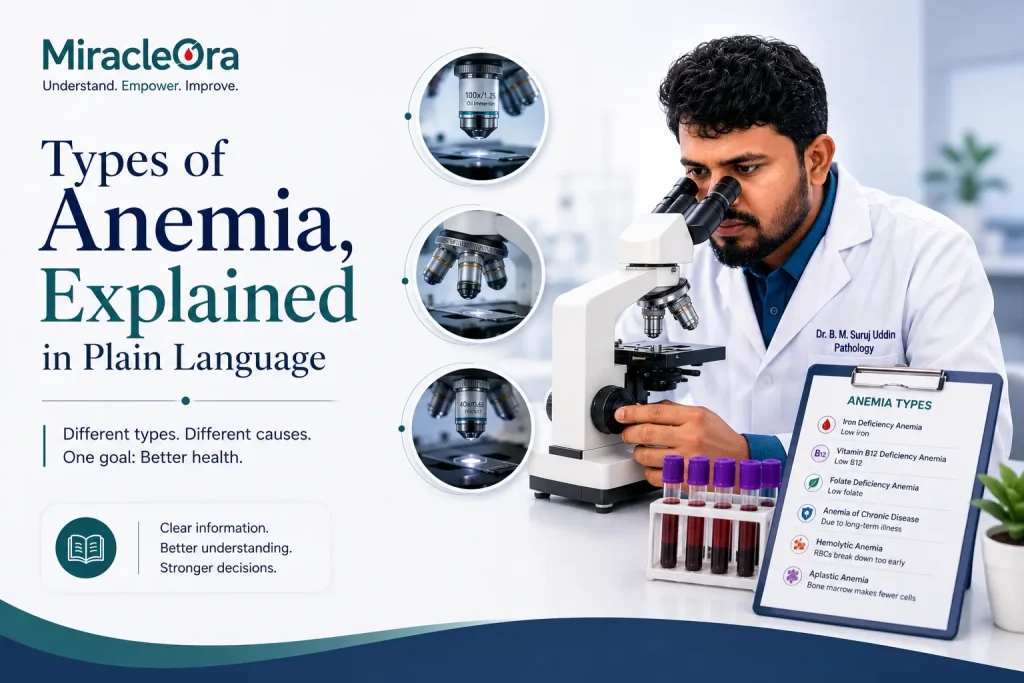
Low hemoglobin has several quite different causes, and the common reasons hemoglobin runs low sets them out. For iron deficiency specifically, hemoglobin is read alongside the red cell indices, and the iron deficiency pattern on a blood test explains which numbers tend to move together.
The NHLBI's list of causes of iron-deficiency anemia shows why the routing matters. It includes bleeding in the digestive tract, heavy menstrual periods or bleeding in childbirth, regular use of medicines such as aspirin or other NSAIDs, and digestive conditions such as celiac disease, ulcerative colitis and Crohn's disease that make iron harder to absorb. None of those can be identified from a symptom list. The WHO, for its part, names inadequate dietary iron as the most common nutritional driver of anemia, and adds deficiencies of vitamin A, folate, vitamin B12 and riboflavin as contributors.
In other words, the same tiredness can sit on top of very different causes, and the cause is what decides what happens next. That decision belongs to the doctor.
What to bring to the appointment
- A plain list of symptoms and when each started, including the ones that seem unrelated, such as ice cravings or restless legs.
- Any bleeding you have noticed, including heavy periods or a change in the color of your stool.
- Every medicine you use, including over-the-counter painkillers.
- Your CBC report and any older reports. A trend tells a doctor more than one value does.
- A rough picture of your usual diet, particularly if you eat little or no meat or fish.
Frequently Asked Questions
Can low hemoglobin cause tiredness?
Yes. Tiredness appears on every source list we read, including the WHO anemia fact sheet (updated 10 February 2025), the NHLBI and MedlinePlus. It is also one of the least specific symptoms there is, so it can be a reason to have a blood test but cannot show what the result will be.
Can low hemoglobin cause headaches?
MedlinePlus lists headaches among the milder symptoms of anemia, the NHS lists them among the main symptoms of iron deficiency anemia, and the NHLBI names them among the effects of untreated iron-deficiency anemia. Headaches have many other causes, so a headache on its own says nothing about a hemoglobin value.
Does low hemoglobin cause hair loss?
Hair loss appears on the iron deficiency anemia pages from MedlinePlus (reviewed 1 April 2025) and the NHS, but not on the general anemia symptom lists we read from MedlinePlus or the NHLBI. That ties it to iron deficiency specifically, which is why a doctor may look at iron stores as well as hemoglobin.
Can symptoms tell me how low my hemoglobin is?
No. None of the pages we read ties a particular symptom to a particular hemoglobin value. The number is read by the doctor who ordered the test, against your laboratory's own reference interval and your age, sex and pregnancy status.
The short version
- Tiredness and headaches appear on the general anemia lists from MedlinePlus, the NHLBI, the WHO and the NHS.
- Hair loss appears on the iron deficiency anemia pages from MedlinePlus and the NHS, not on the general anemia lists we read.
- None of these symptoms is specific, and none can tell you your number.
- MedlinePlus: contact your provider for any anemia symptoms, unusual bleeding, or blood or black tar-like stool.
- If you are too unwell to wait for an appointment, go to the nearest hospital.