Having a normal blood test but still tired is a frustrating combination, and it does not mean the tiredness is imagined. A routine blood count measures specific things, and MedlinePlus describes a complete blood count as "only one tool your provider uses to learn about your health." Its list of fatigue causes includes several that a standard CBC does not measure, such as iron deficiency without anemia, thyroid dysfunction, sleep disorders like obstructive sleep apnea, depression and the side effects of some medicines. Normal results narrow the search; they do not end it. The next step is a follow-up conversation with your clinician about what was tested and what was not.
This guide starts with the signs that need prompt attention, then explains what a normal result can and cannot rule out, and how to bring the question back to your clinician in a useful way.
First: when tiredness needs prompt attention
MedlinePlus's fatigue page (reviewed May 19, 2025, read on October 2, 2026) separates fatigue warning signs into two groups. It advises contacting your provider right away if fatigue comes with any of these:
- Confusion or dizziness
- Blurred vision
- Little or no urine output
- Recent swelling and weight gain
- Thoughts of harming yourself or suicide
If thoughts of self-harm or suicide are present, the 988 Suicide & Crisis Lifeline can be reached in the United States by calling or texting 988, or by online chat. The 988 Lifeline states that conversations are "free and confidential" and that it is "available 24/7/365." If you are in immediate danger, call 911.
MedlinePlus advises contacting your provider for an appointment if you have unexplained weakness or fatigue, especially with fever, unintentional weight loss or regular sweats; constipation, dry skin, weight gain or cold intolerance; frequent nighttime sleep interruptions; frequent headaches; a medicine that may cause fatigue; sadness or depression; or insomnia. A normal blood test does not cancel any of these. They are reasons to go back to your clinician, not to wait it out.
What a normal blood count does and does not tell you
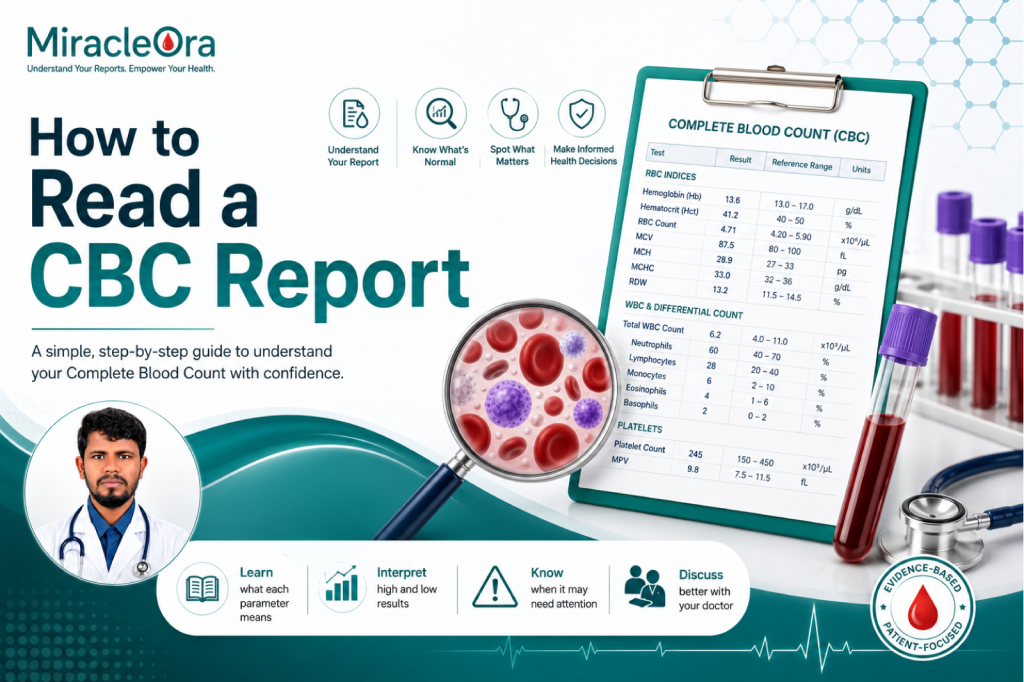
MedlinePlus's CBC test page (updated October 15, 2024, read on October 2, 2026) lists what a complete blood count measures: red blood cells, white blood cells, platelets, hemoglobin, hematocrit and mean corpuscular volume (MCV), the average size of red cells.
That is a valuable set of numbers. A normal hemoglobin, for example, makes anemia an unlikely explanation for tiredness at the time of the test, and anemia is the first cause MedlinePlus lists. Our article on low hemoglobin symptoms explains why it is usually one of the first things checked.
But a CBC does not measure thyroid hormones, iron stores, how well you sleep, or your mood. MedlinePlus's guide to understanding lab results adds a second limit: "A test result that is within a reference range isn't always a guarantee of good health. Some people with health problems can have results that are considered 'normal.'" Our guide on what a CBC test is actually for explains the difference between a screening snapshot and a diagnosis.
Causes of fatigue a standard CBC does not measure
MedlinePlus lists many possible causes of fatigue. The table below takes the causes it names and shows whether a standard CBC measures them directly, based on the components MedlinePlus lists for the CBC.
| Cause named by MedlinePlus | Measured directly by a standard CBC? |
|---|---|
| Anemia, including iron deficiency anemia | Yes, through hemoglobin, hematocrit and red cell measures |
| Iron deficiency without anemia | No. Iron stores are measured by separate tests |
| Thyroid dysfunction | No. Thyroid function is a separate test |
| Sleep disorders such as insomnia and obstructive sleep apnea | No. These are not blood test findings |
| Depression and grief | No |
| Medicines such as sedatives, antidepressants, antihistamines, blood pressure medicines, sleeping pills, steroids and diuretics | No |
| Persistent pain and substance use | No |
| Diabetes, kidney disease and liver disease | No. These need other tests |
The point of the table is not to suggest which of these applies to you. It shows why "my blood test was normal" can be true and still leave the question open. If iron stores are the question your clinician raises, our guide to the ferritin blood test explains what that separate test measures.
Why we do not give "optimal" ranges
If you search this topic, many of the top results come from wellness clinics, nutrition practices and companies that sell blood tests. A common theme is that "normal" is too wide and that narrower "optimal" ranges reveal the real cause. Some quote specific cut-offs for iron, vitamin or thyroid markers.
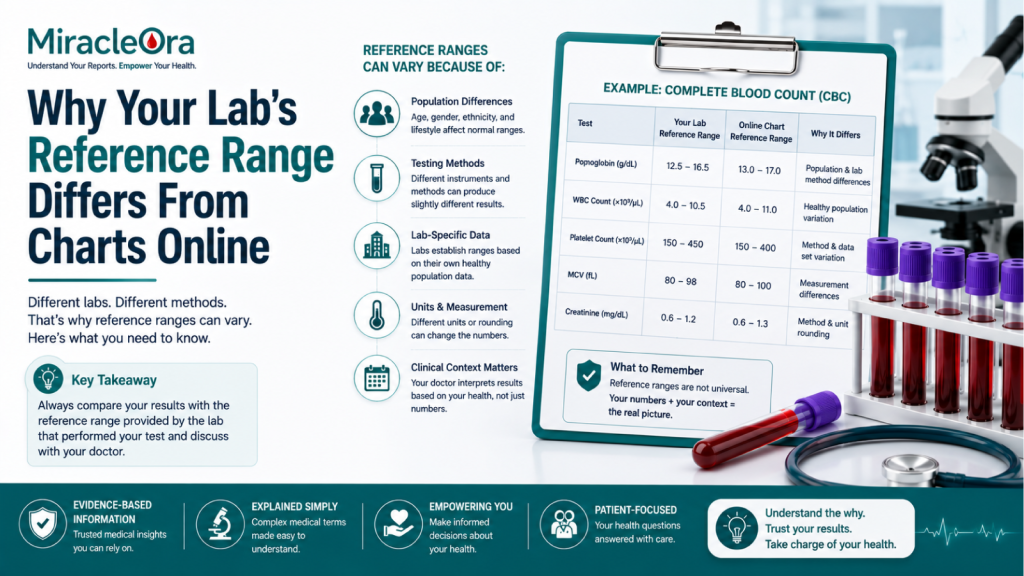
We do not repeat those numbers here. We could not confirm them on a clinical reference page, and reference ranges are set by each laboratory for its own methods. Testing.com explains that many ranges represent "the middle 95% of the reference population," which is why the range on your own report is the one that applies. Our article on why your lab's range differs from charts online covers this in more detail.
If a result sits near the edge of its range and you are still unwell, that is a fair question to ask your clinician directly. The interpretation, and any decision about further tests, belongs with them.
A fatigue diary: bringing it back to your clinician
The most useful thing a reader can do is give the clinician better information. MedlinePlus describes a provider's evaluation of fatigue as including a physical examination and tests, and the details you bring shape which tests make sense. A two-week diary, kept on paper or a phone, can cover:
- Sleep: bedtime, waking time, night waking, snoring if a partner notices it, and how rested you feel on waking.
- Pattern: when the tiredness is worst, and whether rest helps.
- Body changes: weight change, fever, sweats, feeling cold, constipation, dry skin or headaches, all of which appear on the MedlinePlus appointment list.
- Mood: low mood, loss of interest, or recent grief.
- Medicines: everything you take, including over-the-counter medicines and supplements, with start dates.
- Your report: a copy of the blood test, so you can ask, "What was tested, and what was not?"
That last question is the heart of it. It is respectful, specific and hard to answer with "everything is normal."
When no test explains the tiredness
Sometimes the follow-up tests are also normal. The CDC's ME/CFS diagnosis page (dated May 13, 2024, read on October 2, 2026) states that "there is no confirmatory test currently available to diagnose ME/CFS," and that laboratory testing is part of evaluating "other conditions that may explain symptoms."
That does not mean ME/CFS is the answer when tests are normal; only a clinician can assess that. It does mean that normal blood work is sometimes part of how a diagnosis is reached rather than the end of the road. A laboratory report should not create fear; it should create understanding, and a normal one should not create dismissal either.
This article is general information. It cannot tell you why you are tired or what to test next. Your clinician is the right person to decide that with you.
Frequently asked questions
Can you be tired with a normal blood test?
Yes. MedlinePlus lists many causes of fatigue, including sleep disorders, depression, thyroid dysfunction, iron deficiency without anemia and some medicines, and a standard CBC does not measure most of them directly.
Does a normal CBC rule out anemia?
A normal hemoglobin at the time of the test makes anemia unlikely as the cause then. A CBC does not measure iron stores, so iron deficiency without anemia, which MedlinePlus lists as a cause of fatigue, needs separate testing if your clinician thinks it relevant.
When should I see a doctor about fatigue with normal results?
MedlinePlus advises an appointment for unexplained fatigue with fever, unintentional weight loss or sweats, frequent night waking, headaches, low mood or insomnia, and contacting your provider right away for confusion, blurred vision, little urine output or thoughts of self-harm.
What should I ask my doctor if my tests are normal but I am still tired?
A good starting question is "What was tested, and what was not?" Bringing a short diary of sleep, mood, symptoms and medicines helps your clinician decide whether further tests make sense.